
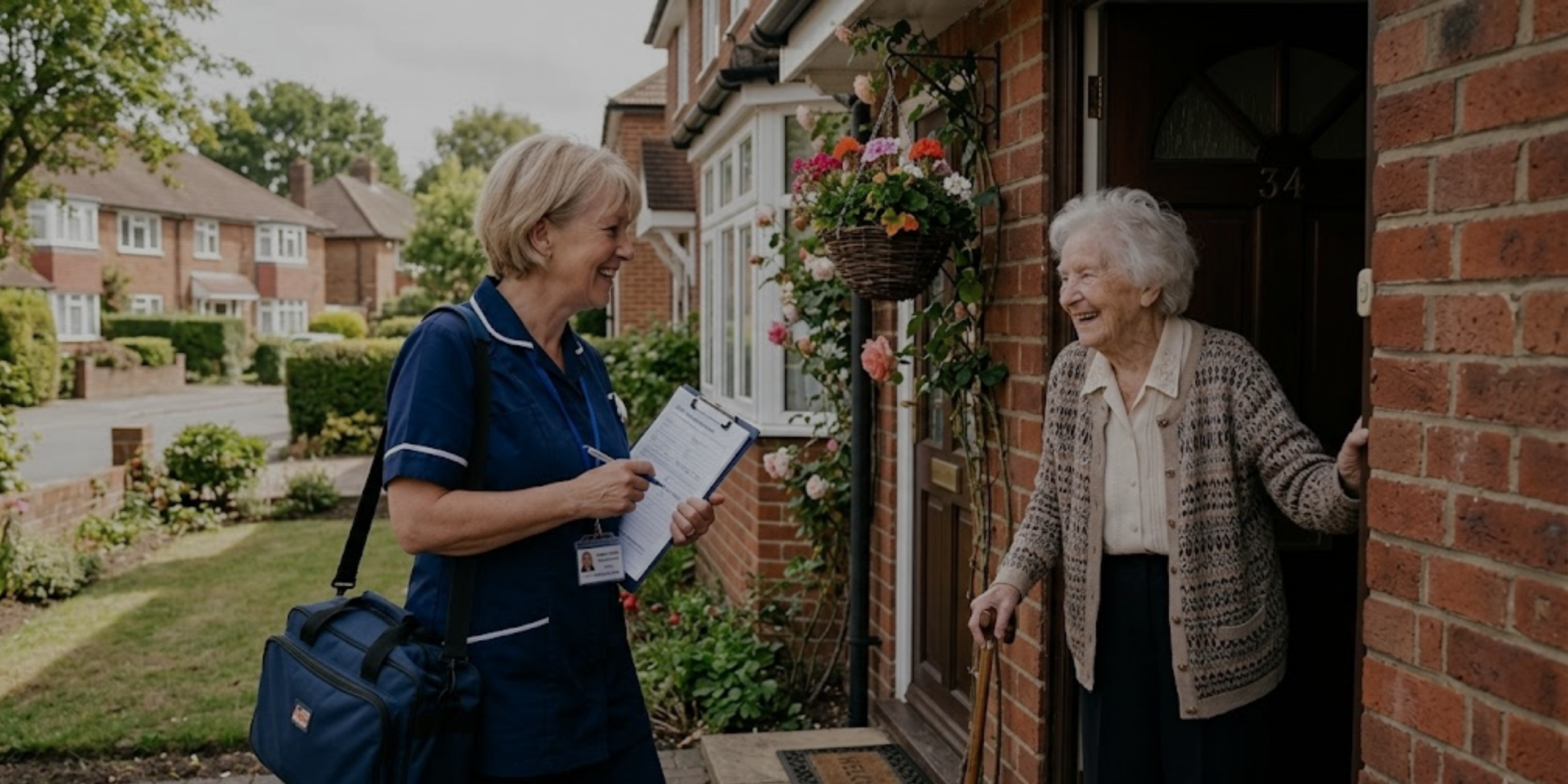
Your Top 30 Home Care Questions Answered
Clear, honest answers to the questions Lowestoft families ask most about home care.
Getting Started
These are the questions we hear first from families new to home care. They’re the ones that matter most when you’re making a decision that affects someone you love.
1. How do I get started with Amari Care Services?
Getting started is straightforward. You can call us on 01502537293 or fill out a contact form on our website. We’ll have an informal chat to understand your situation, what you’re looking for, and whether we’re the right fit. If it sounds like we can help, we’ll arrange a home visit where you’ll meet one of our team. This visit is obligation-free, and it’s your chance to ask questions and get to know us.
2. What happens after my first phone call?
We listen carefully during that first call. We’ll ask about the person’s needs, their personality, what matters to them, and any worries you have. We’ll explain how we work, what’s involved, and give you an honest sense of whether home care is right for this moment. If you’d like to go further, we book a home visit at a time that suits you. No pressure, no rush.
3. How quickly can care actually begin?
It depends on urgency and availability. For emergencies—say, someone leaving hospital—we can often arrange care within days. For ongoing care, we typically aim to start within 2-3 weeks, which gives us time to match the right carer to the person, do our checks, and make sure everything is prepared properly. We’ll always be honest about timing upfront.
4. Do I need a GP referral to arrange home care with Amari Care Services?
No, you don’t need a GP referral to contact us or arrange private care. You can come directly to Amari Care Services. That said, your GP may be involved if you’re accessing council-funded care or if there are medical aspects we need to coordinate. We’ll work with your GP or hospital if needed, but the first step is always just speaking to us.
5. How do you arrange care for someone who lives alone?
Living alone doesn’t stop us from providing great care—it just means we’re extra careful about safety and communication. We’ll work out a schedule that works for the person and ensure someone knows when carers are visiting. We can use technology like door sensors or check-in calls if that helps. The key is building a relationship with the person so they trust their carers and feel comfortable opening the door.
Cost and Funding
Money matters. It’s one of the biggest questions when you’re exploring care options. We’re honest about what things cost and what might help.
6. How much does home care cost?
Home care costs vary depending on what you need—the number of visits, how long they last, what time of day, and what kind of support is involved. As a rough guide, private home care in Suffolk ranges from around £20 to £35 per hour depending on the service. We’ll give you a detailed written quote after our initial visit, so you know exactly what you’re paying for. Call us on 01502 537 293 for a free, no-obligation discussion about your situation.
7. Is home care cheaper than a care home?
Not always, and it’s not really an apples-to-apples comparison. A care home typically costs £800-£2000+ per week all-in. Home care might cost less or more depending on what’s needed. But many families choose home care not because it’s cheaper, but because it’s better for the person—they stay in their own home, keep their independence, and have familiar surroundings. That’s priceless, even if the actual cost is similar.
8. Can Lowestoft council help with funding?
Yes, potentially. If the person is over 65 and has been assessed by social services as needing care, the council may contribute towards the cost. The amount depends on their financial circumstances and the outcome of a financial assessment. You’ll typically pay the difference between the council’s contribution and the actual care cost. We work with all the local councils in Suffolk and can help you navigate the funding conversation. Speak to your local authority or call us on 01502 537 293.
9. Does the person qualify for Attendance Allowance?
Attendance Allowance is a benefit for people over 65 who need help with personal care or supervision. It’s not means-tested, so savings or pensions don’t affect it. The amount depends on whether you need help day and night, or just one or the other. It typically ranges from £70 to £195 per week. This money can go towards paying for home care. It’s worth applying—the process can take a few months, so don’t delay.
10. Will Amari Care Services give me a written quote?
Absolutely. We always provide a detailed written quote before you commit to anything. The quote will break down the hours, the frequency of visits, the cost per hour, and the total weekly or monthly cost. It’s binding once you sign it, so you’ll know exactly what to expect. We’ll explain everything and answer any questions about the quote.
Your Care Team
The carer who walks through the door is what makes the difference. This is about trust, personality, and match.
11. Who will actually be caring for my parent?
We carefully match carers to the person they’ll be supporting. We look at personality, experience, interests, and what matters to each person. You’ll meet the carer (or usually, the main carers) before care begins. We take time to get this right because the relationship between carer and client is everything. We’re not just assigning someone; we’re creating a caring partnership.
12. Will it be the same carer every time?
Consistency is one of our core values. In most cases, the same carer or a small team of regular carers will visit. This builds trust and means the carer learns the person’s routines, preferences, and needs. Sometimes cover is needed (holiday, sickness), and we’ll always let you know in advance and use a known backup. But continuity is what we aim for, every single time.
13. What if we don’t get on with a carer?
Tell us immediately. We’d rather know than have anyone uncomfortable. Sometimes personalities just don’t click, and that’s okay. We’ll listen to feedback and work to find a better match. We might adjust the carer pairing, or if that doesn’t work, we’ll arrange a different carer. Your satisfaction and the person’s comfort come first.
14. Are all Amari Care Services carers DBS checked?
Yes, every single one. Every carer working for Amari Care Services has an up-to-date DBS (Disclosure and Barring Service) check. This is non-negotiable. We also carry out thorough reference checks and safeguarding interviews. Your peace of mind is our responsibility, and we take it very seriously.
15. What training do your carers receive?
All our carers have completed formal care training including Health & Social Care Level 2 or equivalent. Beyond that, they receive induction specific to each person they’ll care for, training in safeguarding, moving and handling, first aid, and specialist training based on the individual’s needs—whether that’s dementia awareness, Parkinsons, diabetes, or other conditions. We invest in our team because they are Amari Care Services.
Daily Care
What actually happens when a carer arrives? Here’s what to expect during a typical visit.
16. What does a typical visit look like?
It depends on what’s been arranged, but a typical visit might include: helping the person get washed and dressed, assisting with breakfast, checking medications, tidying up, maybe a walk around the garden or into town, a chat and a cup of tea. The carer’s job is to help the person live their life as they’d want to live it—supporting independence where possible, and providing hands-on help where needed. The carer clocks in and out on our app so you always know they’re there.
17. Can carers help manage medications?
Yes, within safe limits. Our carers can encourage people to take their prescribed medications and can prompt them to take tablets at the right time. They cannot administer injectable medicines or do clinical tasks. If complex medication management is needed, we’ll discuss specialist provision with you and your GP. Medication safety is always paramount.
18. What about help with meals?
We can help with everything meal-related: planning, shopping, preparing, cooking, and eating. If the person has specific dietary needs—diabetic, soft food, allergies—we’ll factor that in and make sure the carer knows how to support them. We can also arrange shopping trips or check that there’s fresh food in the house. Good nutrition makes a real difference to wellbeing.
19. Can carers take my parent out?
Absolutely. Taking people out to shops, the park, the GP, or just for a drive is part of what we do. We arrange insurance and risk assessment so the carer and the person can do things together. Getting out of the house—seeing friends, getting fresh air, having a change of scenery—is vital. Our carers are trained to support people safely, whether it’s a short trip or a longer outing.
20. What happens if my parent refuses care?
This is common, especially early on. Sometimes people worry about strangers in their home or resist change. Our carers are trained to be patient, respectful, and understanding. We’ll work with you to understand the resistance—is it the time of day, a particular carer, the type of help? We’ll adjust if we can. If serious safeguarding concerns arise, we’ll involve your GP or social services. But most of the time, resistance eases once the person meets the carer and gets used to the routine.
Safety and Oversight
How do you know your loved one is safe? How do we stay accountable? These are the questions that matter most.
21. How do I know visits are actually happening?
Transparency is built into our system. When a carer arrives and leaves, they clock in and out using our tracking app. You can see visit times in your care dashboard or we’ll send you regular reports. We also encourage frequent communication between you and the carer, and between you and us. Regular check-ins are part of good care oversight.
22. What technology does Amari Care Services use?
We use a mobile app that shows visit times and allows communication between family and carers. Some people also choose to use door sensors, medication reminders, or other smart home technology to give extra peace of mind. We’re not prescriptive—we work with what’s right for each person. Privacy is always respected; we only use tech that everyone is comfortable with.
23. What happens if there’s an emergency?
If something serious happens during a care visit—a fall, chest pain, an accident—the carer calls 999 immediately and stays with the person. They’ll call you next. If it’s less urgent but still concerning, they’ll contact our office and we’ll help determine next steps. Every carer is trained in basic first aid and emergency procedure. You’ll have 24/7 contact numbers for emergencies.
24. What does a CQC “Good” rating actually mean?
Amari Care Services is rated Good by the Care Quality Commission (CQC), the regulator of all adult care services in England. A “Good” rating means the CQC inspectors found that care is safe, effective, caring, responsive, and well-led. It’s not just a tick-box; it reflects independent assessment that we’re doing things right. You can read our full CQC report on their website or ask us for details.
25. How do you handle complaints?
We take every concern seriously. If something’s not right, tell us straight away—your feedback helps us improve. We have a formal complaints procedure that ensures every issue is investigated, documented, and responded to within a set timeframe. We aim to resolve things quickly and fairly. Ultimately, if you’re not happy, you have the right to raise complaints with the CQC or the local authority. But we’d much rather fix things ourselves.
Specialist Needs
Not all care is the same. These questions cover the specialist support we offer beyond general home care.
26. Can Amari Care Services help with dementia care?
Yes, we have significant experience supporting people living with dementia. We offer dementia-aware care training to all relevant carers, which includes understanding behaviour, communication techniques, and how to maintain dignity and independence. Care is personalised to the individual’s stage of dementia and adjusted as needs change. Dementia care requires patience, skill, and consistency—all things we build into our approach.
27. Do you provide end-of-life care support?
Yes. We work with families, GPs, and specialist palliative care teams to support people at the end of life. This might include comfort care, pain management support, emotional support for family members, and help with the practical aspects of care. It’s deeply meaningful work, and our carers are trained to provide dignity and compassion when it matters most. We coordinate with your medical team to ensure everything is aligned.
28. Do you offer live-in care?
Yes, we do provide live-in care for people who need 24-hour support. A carer lives in the person’s home and provides care round the clock. This is often the choice for people with significant needs or those who live alone. We discuss live-in care arrangements carefully to make sure it works for everyone—the person, the family, and the carer. It’s a more intensive service and costs more, but for the right person, it can be transformative.
29. What about overnight care?
We offer overnight care (also called waking nights or sleep-in care), where a carer is present in the person’s home overnight to respond to any needs, emergencies, or toilet visits. This is different from live-in care in that it’s usually for 1-7 nights per week, and the carer may sleep unless called upon. It’s often used for people who are at risk of falls at night, who have dementia, or who feel anxious in the dark. Call us on 01502 537 293 to discuss if this might suit your situation.
30. Do you help people coming home from hospital?
Hospital discharge is exactly when people need good home care support. We work with hospital discharge teams to arrange care quickly and coordinate with physiotherapy, district nursing, and other services. The first few weeks at home after hospital are critical—our carers can help with rehabilitation, building confidence back up, and preventing falls or further problems. We can often arrange care within 48 hours for discharge situations. If this is your situation, call us urgently on 01502 537 293 and we’ll move quickly.